

he morning began with silence. For some reason, the black grouse weren’t displaying. I had hoped to hear their familiar bubbling calls and watch the action at the lek, but there was nothing doing. Birds keep their own schedules, after all. And the good thing about a day out in the field is that you never quite know which bird will become the main character.
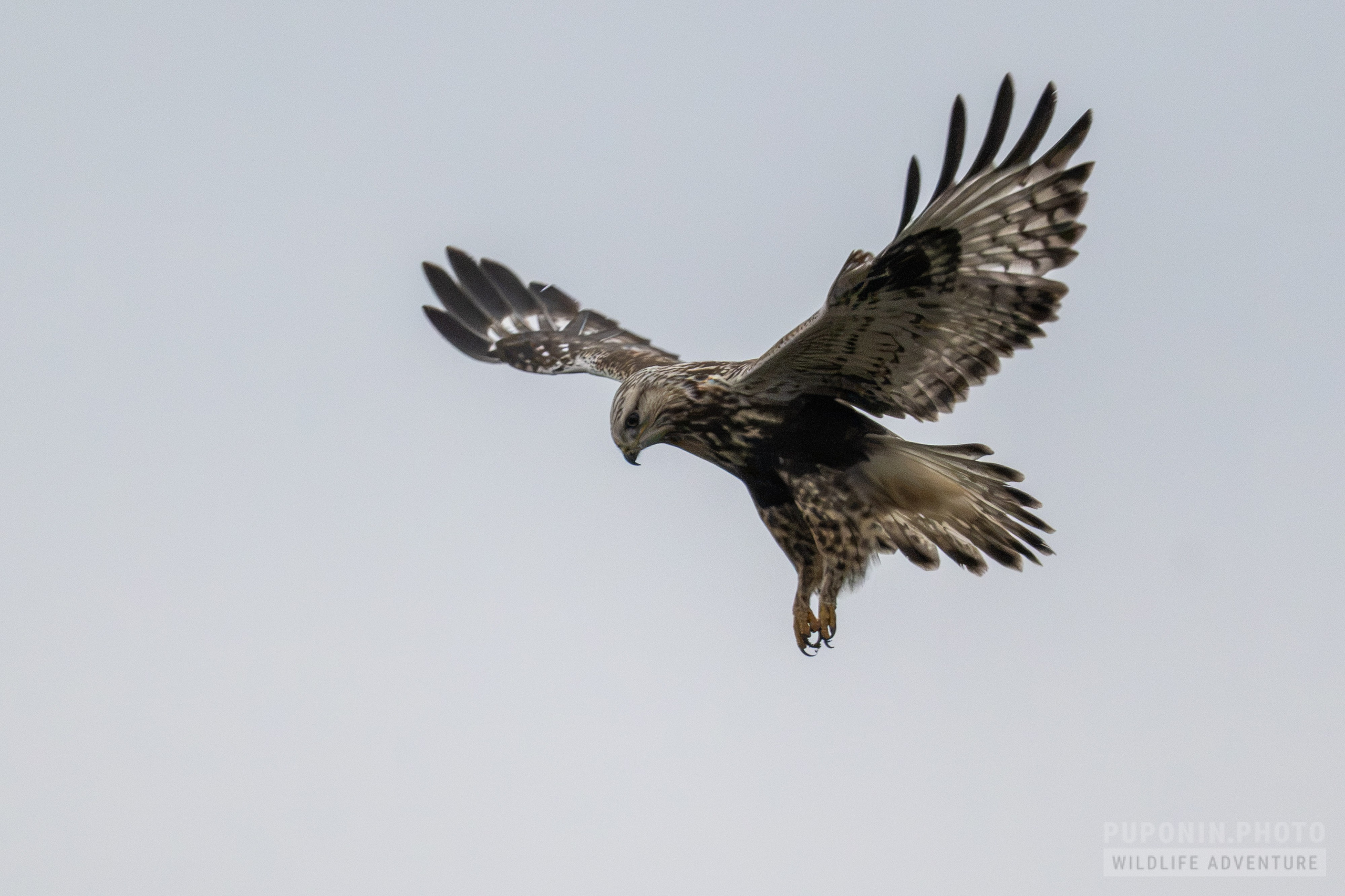
This time, it was a rough-legged buzzard.
The others I encountered along the way kept their distance, taking off as soon as I approached. This one was remarkably calm. It watched its surroundings, seemed in no hurry to leave, and allowed me to photograph it at close range.
Encounters like this are a real gift in wild bird photography. There’s time to consider the composition, wait for a turn of the head, and watch for something special. In this case, that moment came when the buzzard spread its wings, revealing its flight feathers beautifully. That frame alone made the trip worthwhile.
So much depends on the individual bird. The same species, in similar surroundings, can behave very differently. One spots you from far away and immediately leaves; another carries on with its day. When that happens, you get a chance to do more than take a photograph. You can watch where it looks, what catches its attention, and how it chooses its moment to move. The key is to be patient and let the bird decide how much space it needs.
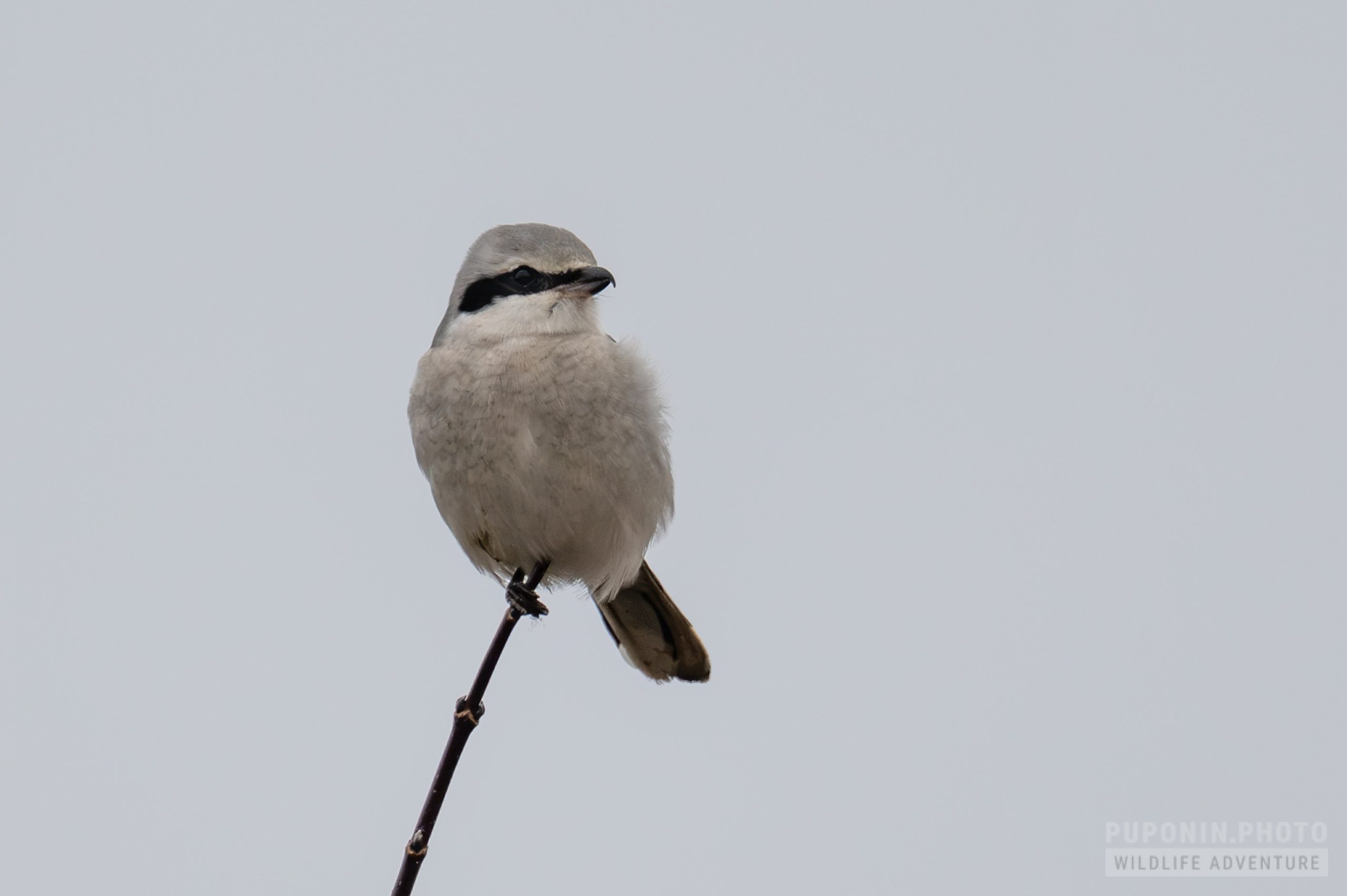
Farther along, I found a great grey shrike perched on a twig, scanning for prey. A small bird, but with the bearing of a very serious hunter. No fuss, no wasted movement—just close attention to the ground below.
The shrike also gave me time for a few photographs, although it offered little variety in its poses. It had a hunt to get on with and clearly wasn’t there to entertain a photographer. Still, that’s part of the pleasure of birdwatching: sometimes a quiet scene, with a bird simply waiting, is enough to hold your attention.
Then I noticed a tree full of crows and magpies. It seemed an unusually large gathering, and at first I couldn’t work out what had brought them together.
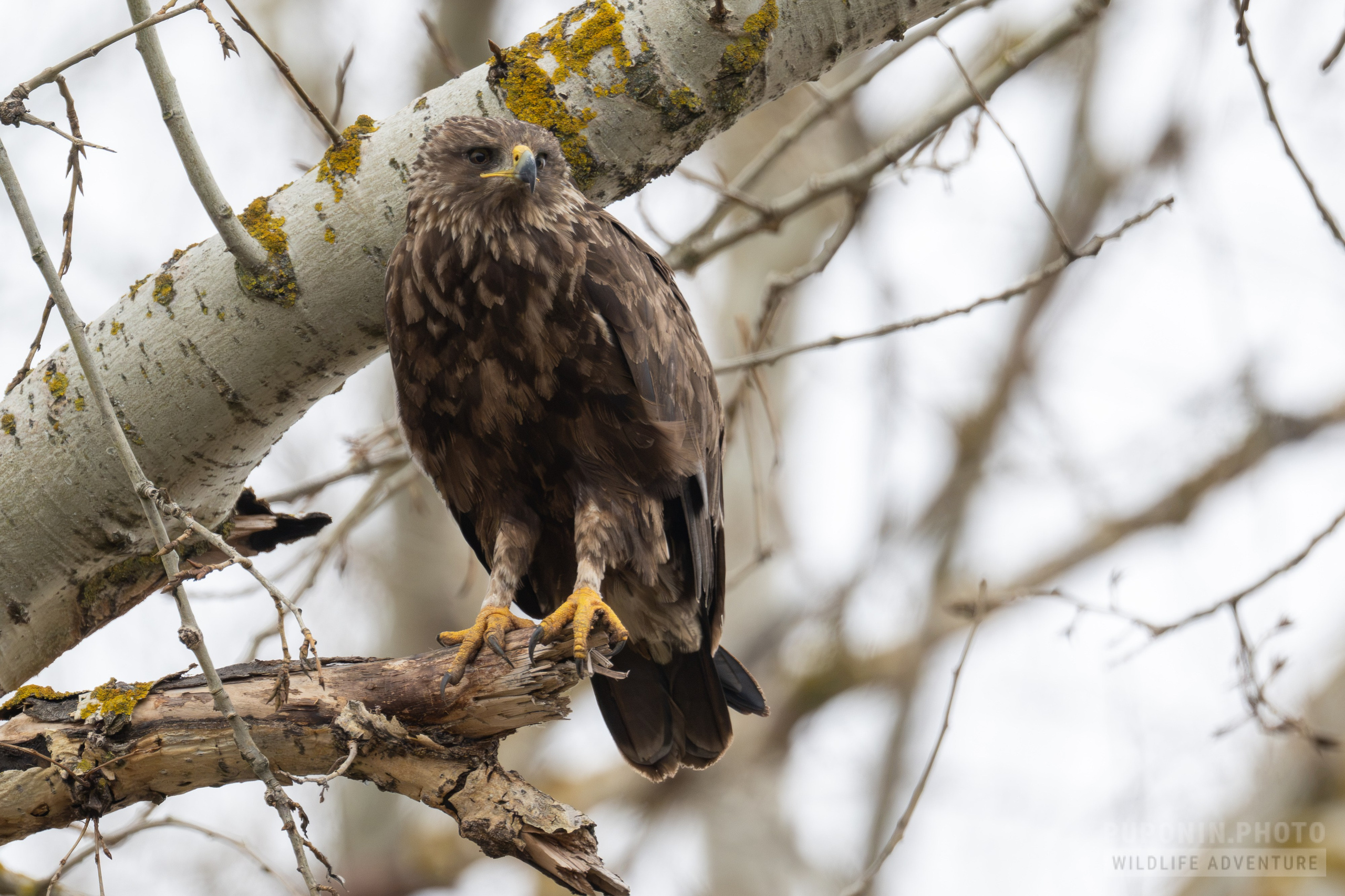
As I moved closer, the crowd scattered, revealing a spotted eagle perched beneath them.
That explained the audience. A large bird of prey had settled in, and the local birds clearly had no intention of ignoring it. The eagle stayed for a little while, looked at me, and eventually decided it was time to leave.
Its departure was anything but peaceful. The magpies immediately followed, chasing it on its way. Judging by the escort, this particular neighbour wasn’t welcome.
One question remains: was it a greater spotted eagle or a lesser spotted eagle? That will take a closer look at the photographs and a careful comparison of identification features. Enjoying the encounter is one thing; confidently identifying the bird is another.
And that was how a morning that refused to follow the plan turned into a memorable day of bird photography. No black grouse display, but a cooperative rough-legged buzzard, a focused great grey shrike, and a spotted eagle with a noisy escort.

Solar and lunar halos
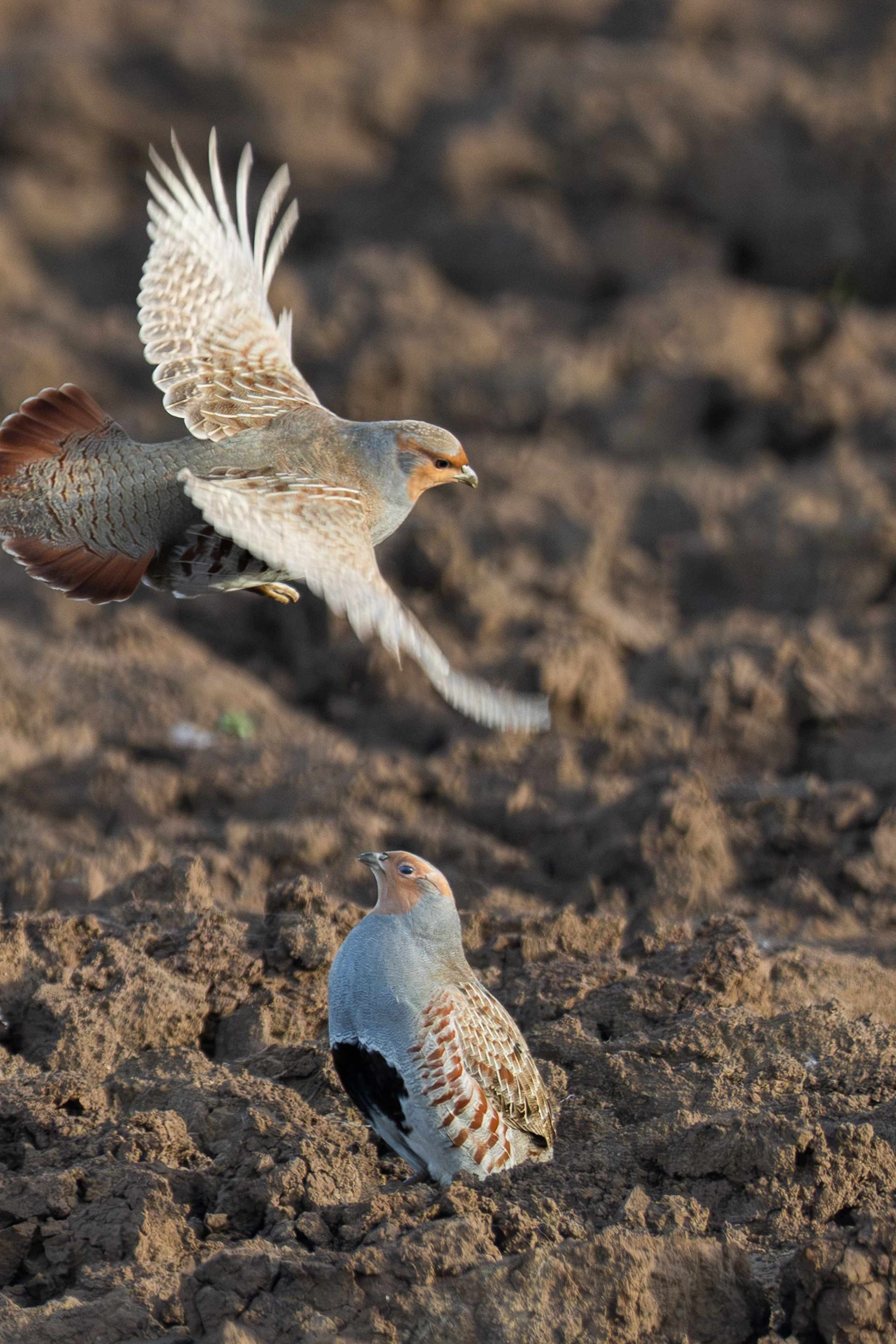
A Shrike’s Concert and the Dance of the Partridges

Double Portrait: Red Deer

Morning in the flood meadows. A vocal duel between red deer stags.

The First Frost. Red Deer Wildlife Photography on a Crystal-Covered Morning.

Полевое тестирование Sony 600 mm F/6.3 GM OSS. День первый.

Полевое тестирование Sony 600 mm F/6.3 GM OSS. День второй. 2TC = 1200 mm!


Турухтаны


