

I arrived before sunrise, found a spot with a good view of the river, and settled down to wait. The sun slowly rose above the horizon, illuminating the trees and the river valley. But the deer never appeared. Not a single one! It looks as though I’ll have to rethink my approach and find another strategy.
However, the morning had a surprise in store for me.
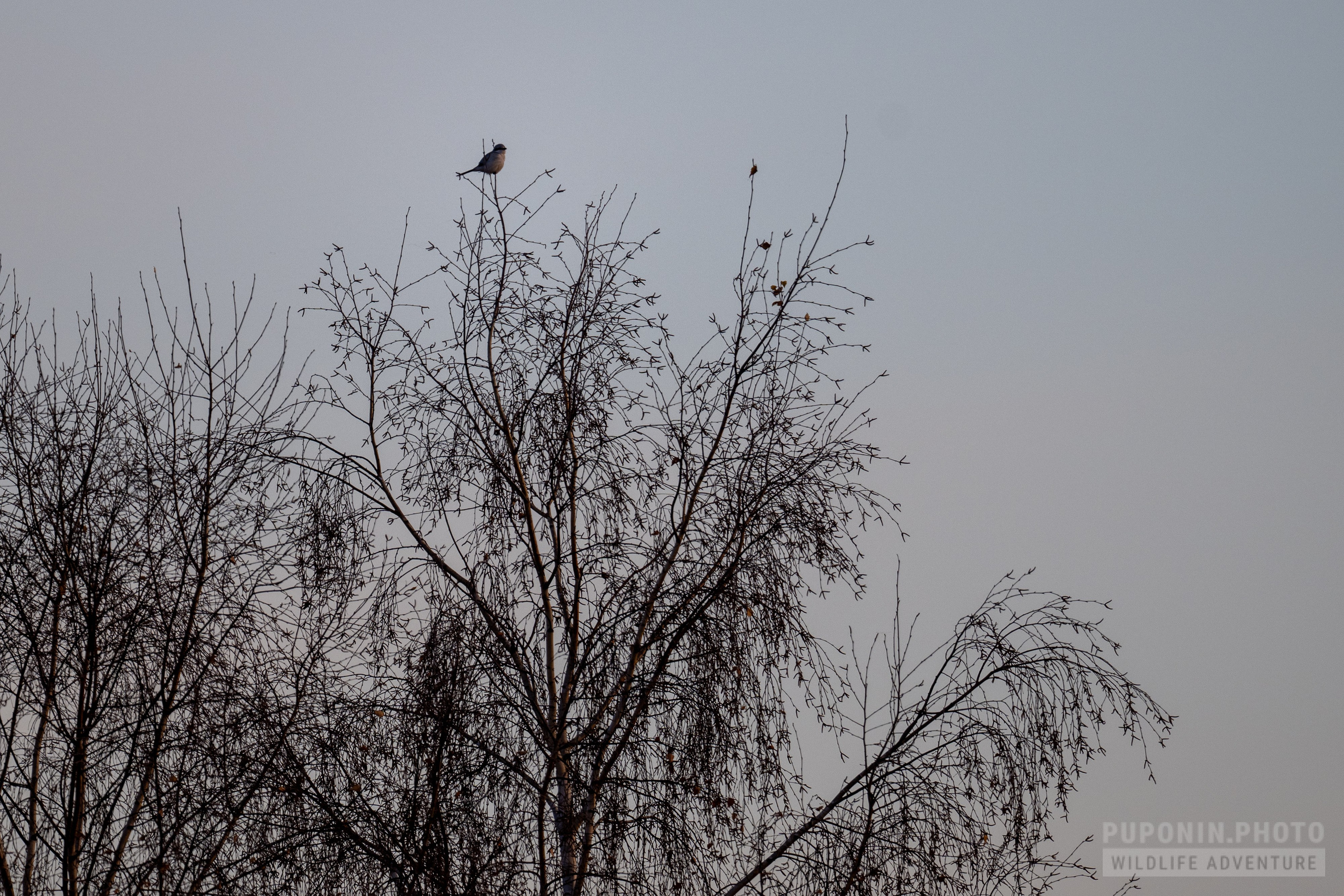
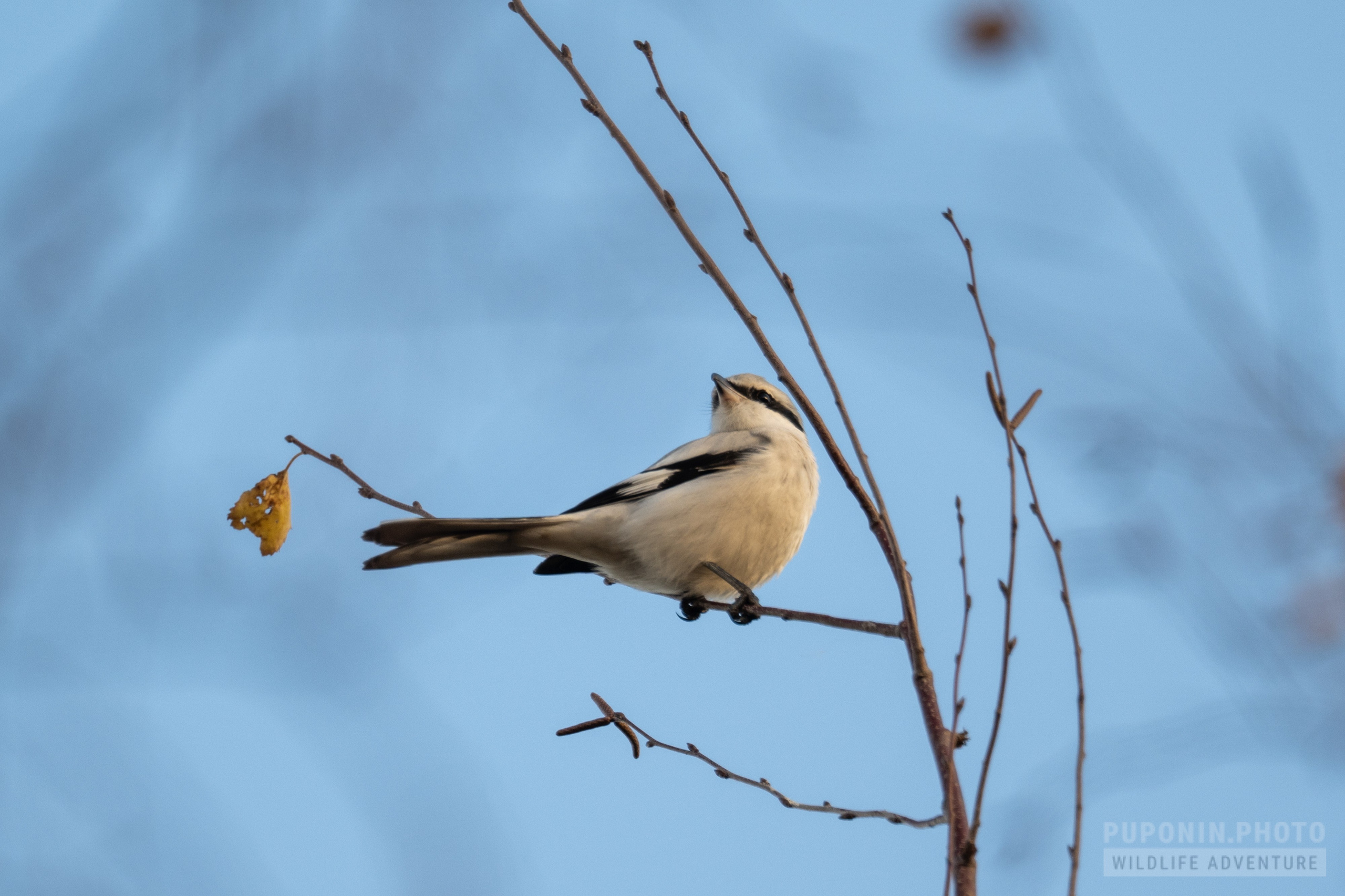
At the top of a tree sat a Great Grey Shrike (Lanius excubitor), facing the rising sun. The first rays of sunlight beautifully illuminated its grey and white plumage. And, to my surprise, it was singing!
I had always known shrikes as small predatory birds that perch on exposed branches, scanning the surroundings for prey. But I had never expected such an extraordinary variety of sounds from one.
One moment, it produced clear, melodic whistles. The next, it launched into rapid trills, almost reminiscent of a nightingale. Then came harsh rattling, scraping and crackling sounds, as though some little mechanical device had suddenly started working. And just as unexpectedly, it returned to gentle melodic phrases, sometimes resembling the calls of other birds.
Great Grey Shrikes are indeed capable of vocal mimicry, incorporating elements of other birds’ sounds into their songs. Their repertoire is a remarkable mixture of whistles, warbles, trills and harsh notes. Interestingly, they may sing not only during the breeding season but also in autumn and winter.
It’s quite a combination: a small predator with a hooked bill, capable of hunting mice, insects and even small birds, turns out to be a surprisingly accomplished singer.
Eventually, it became clear that the deer were not going to show up, so I packed my equipment and headed back.
And that’s when I came across another fascinating scene.
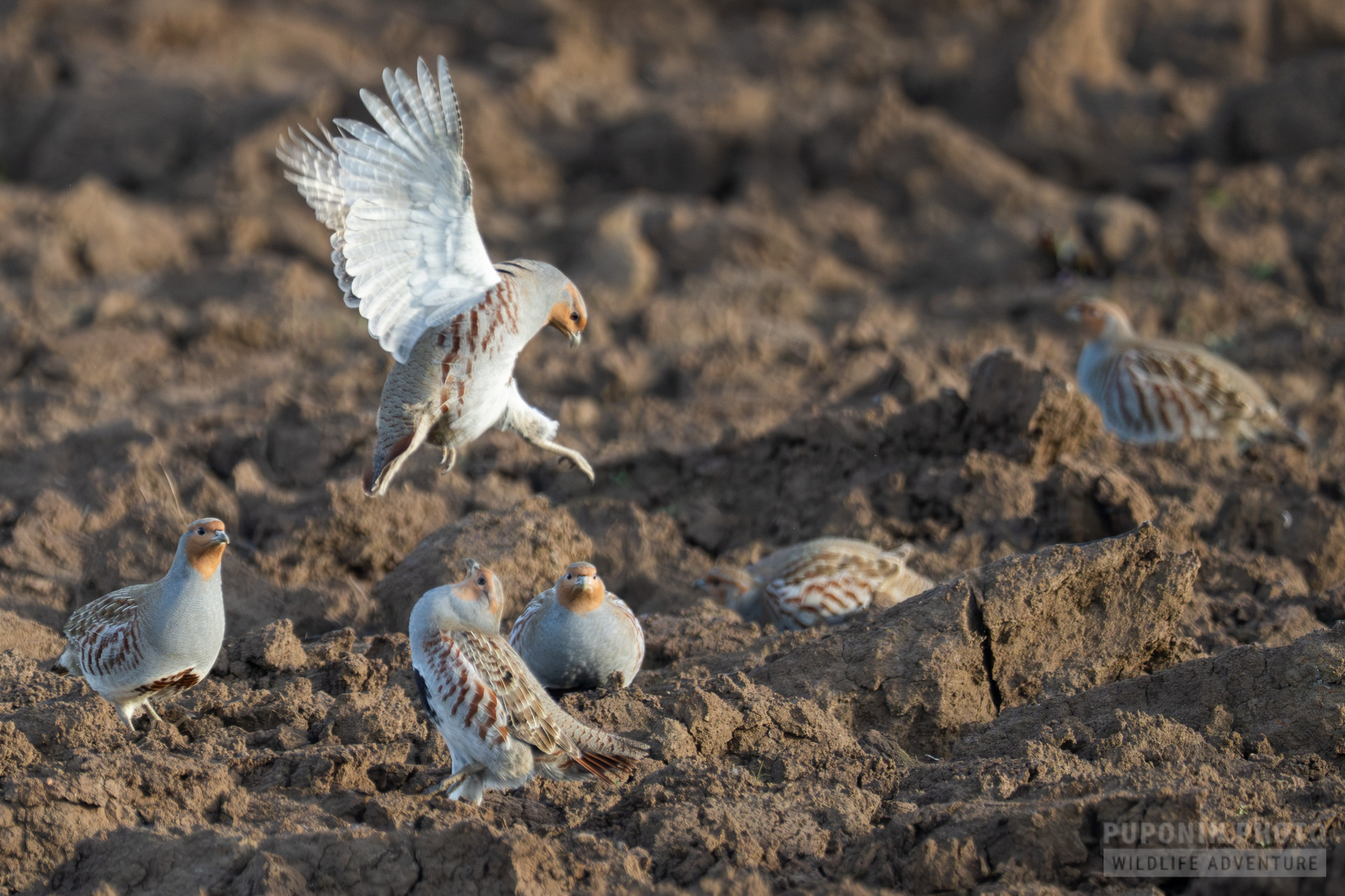
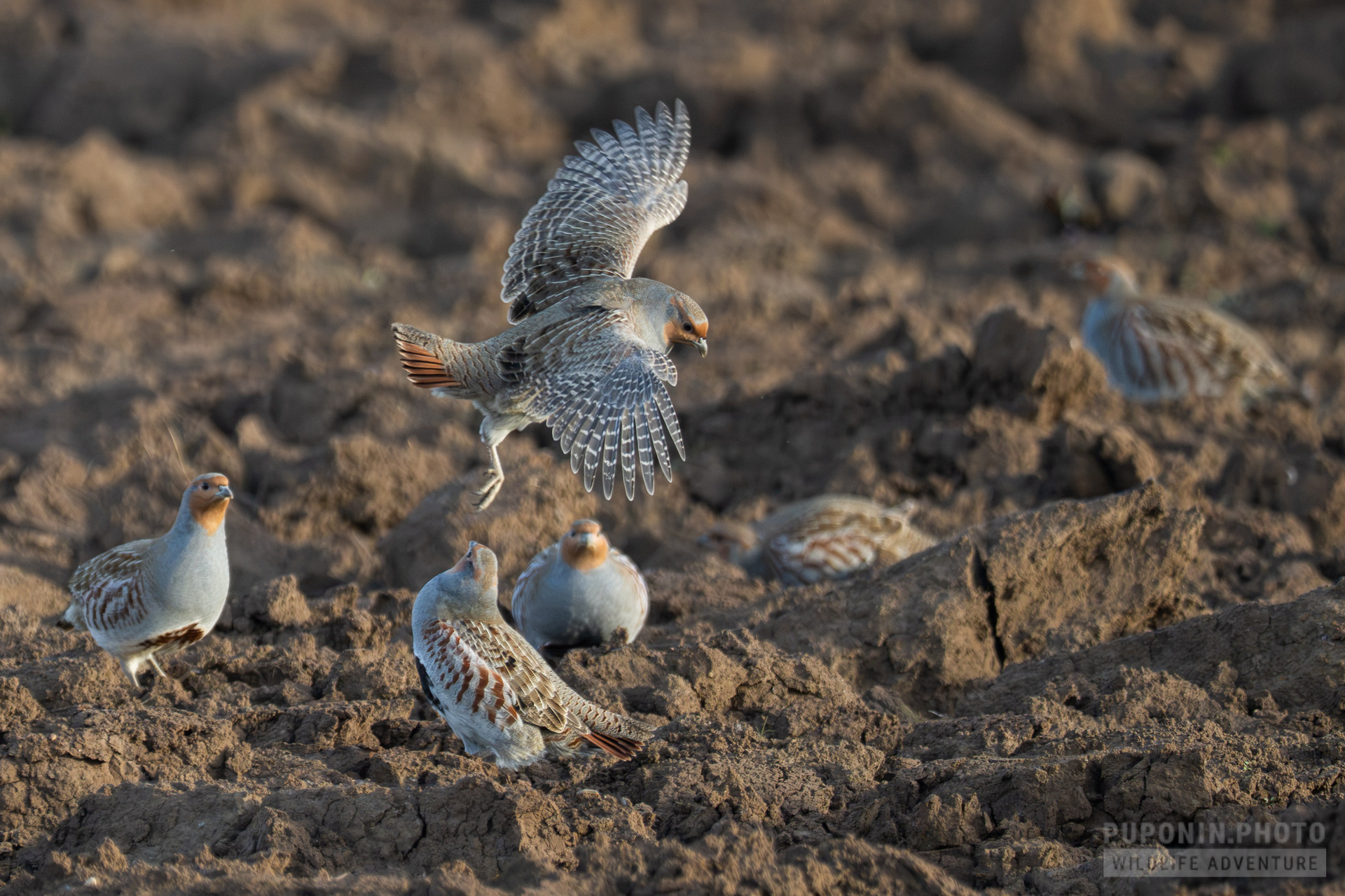
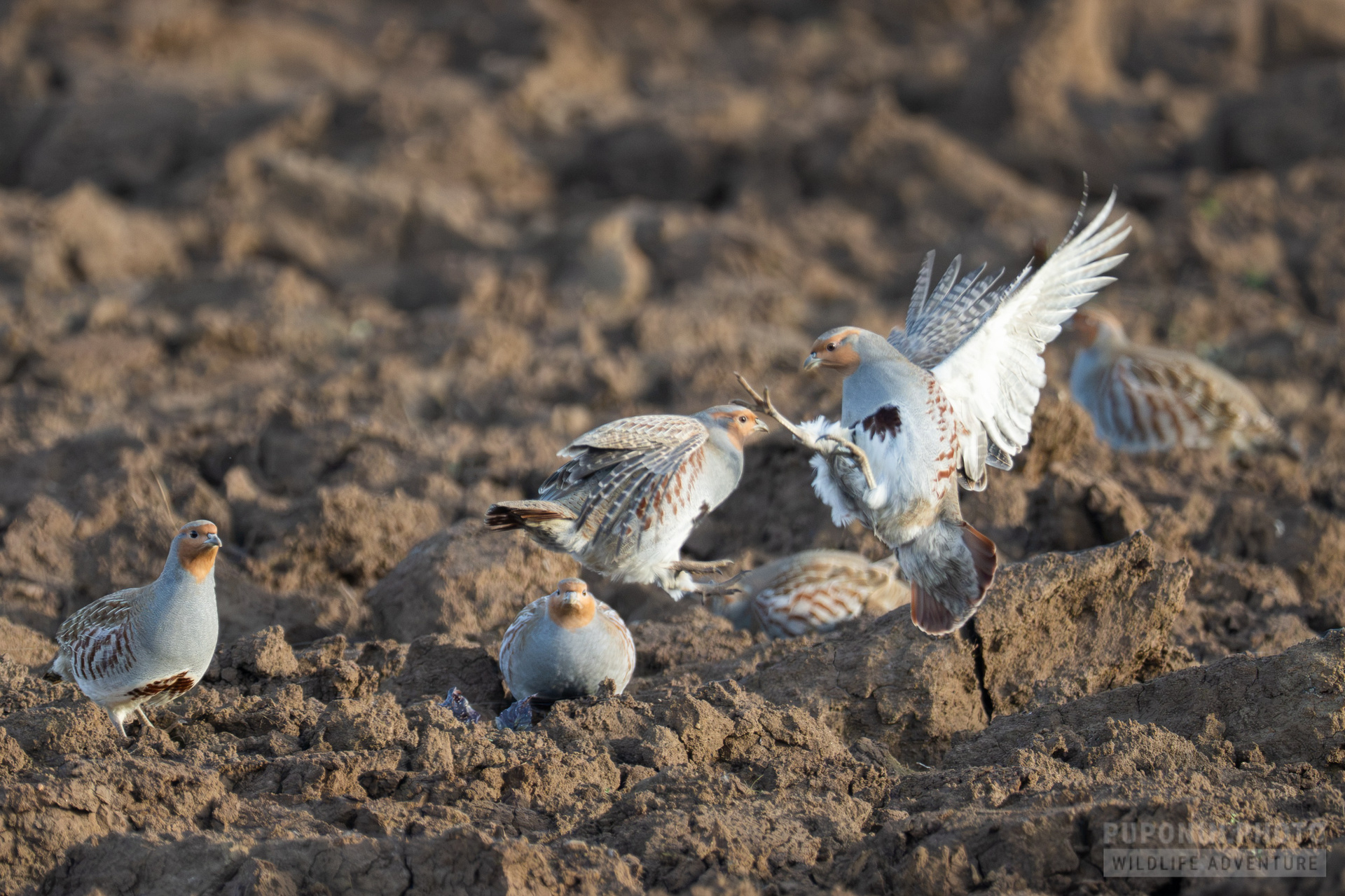
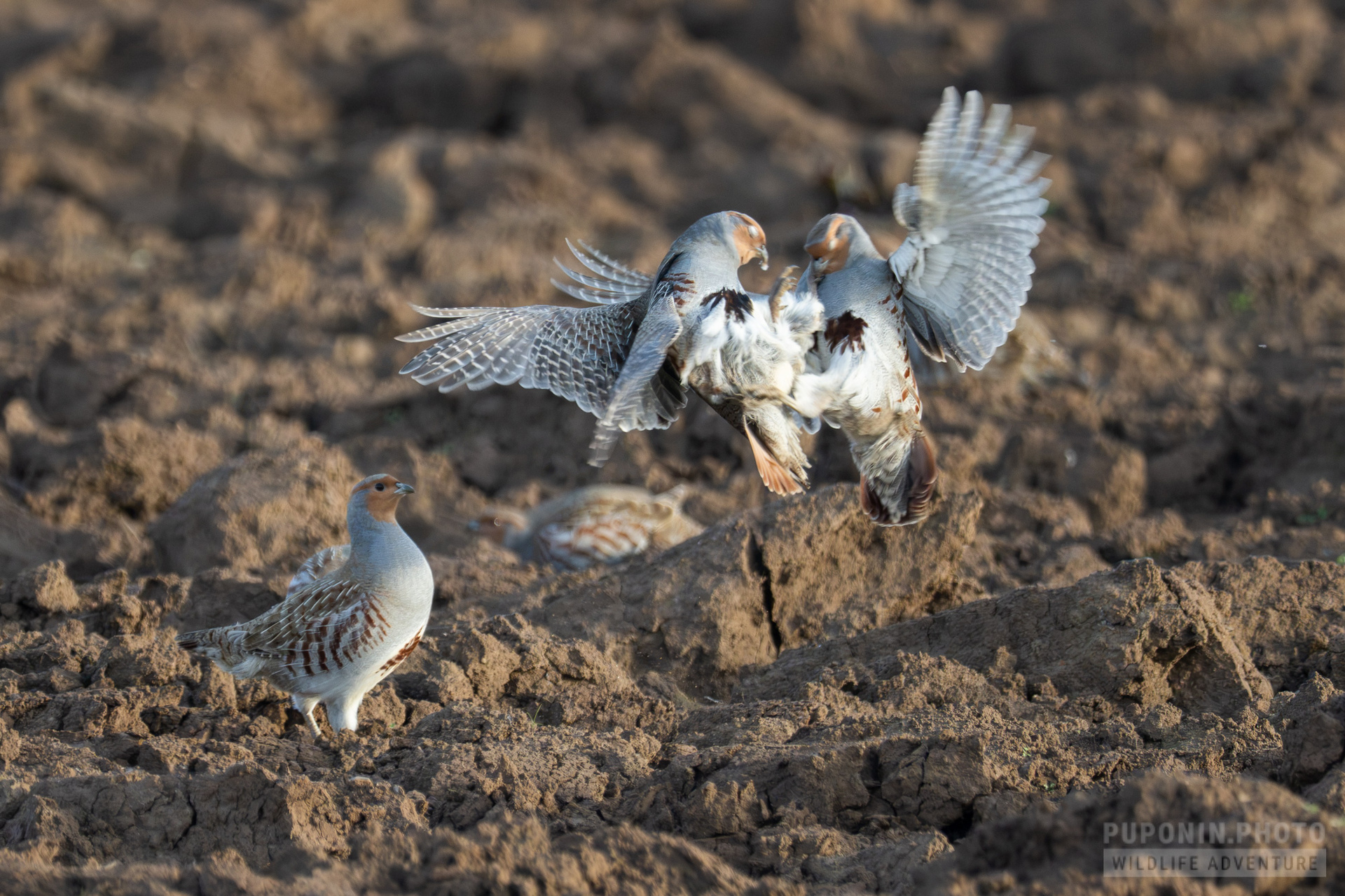
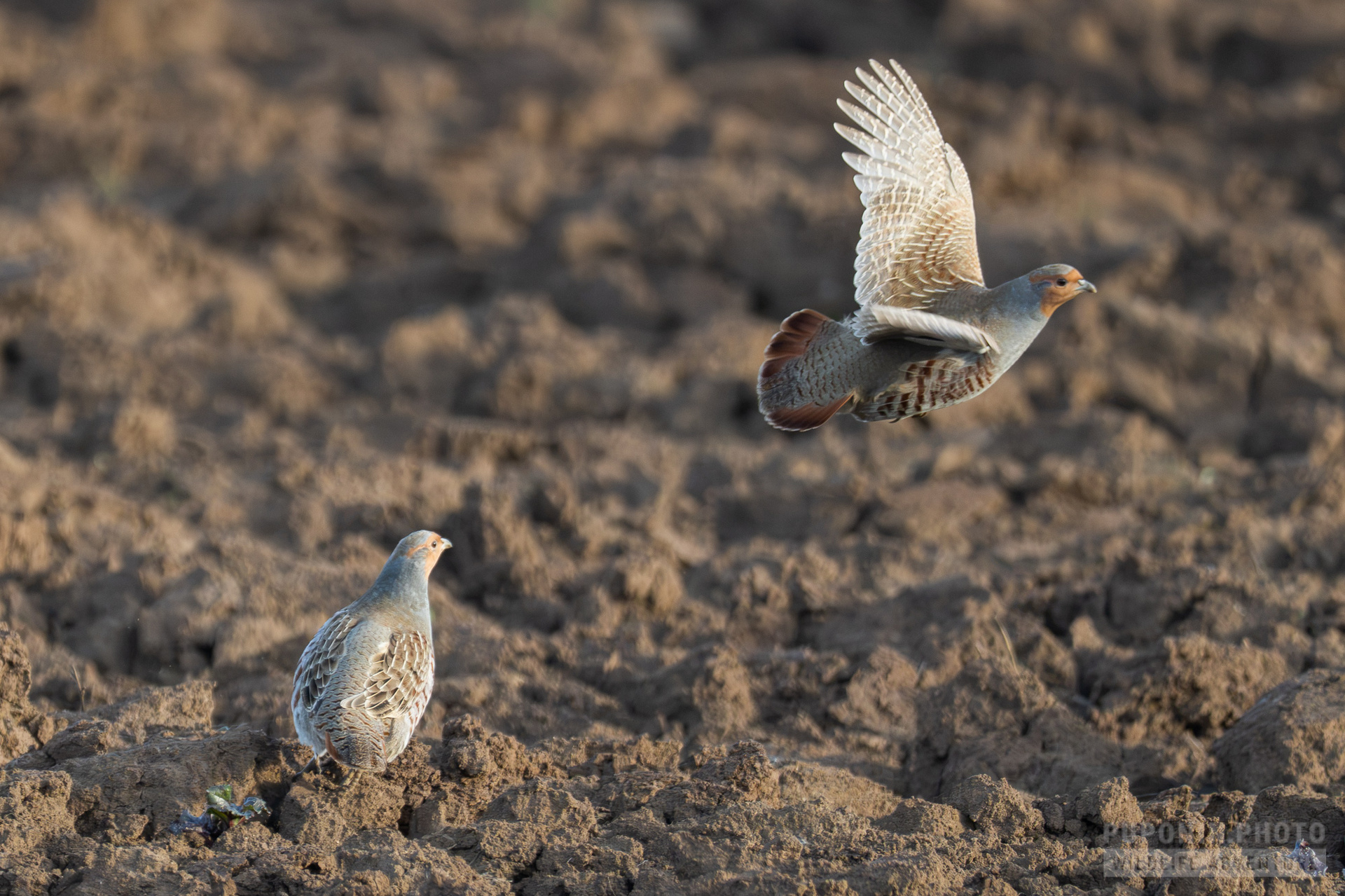
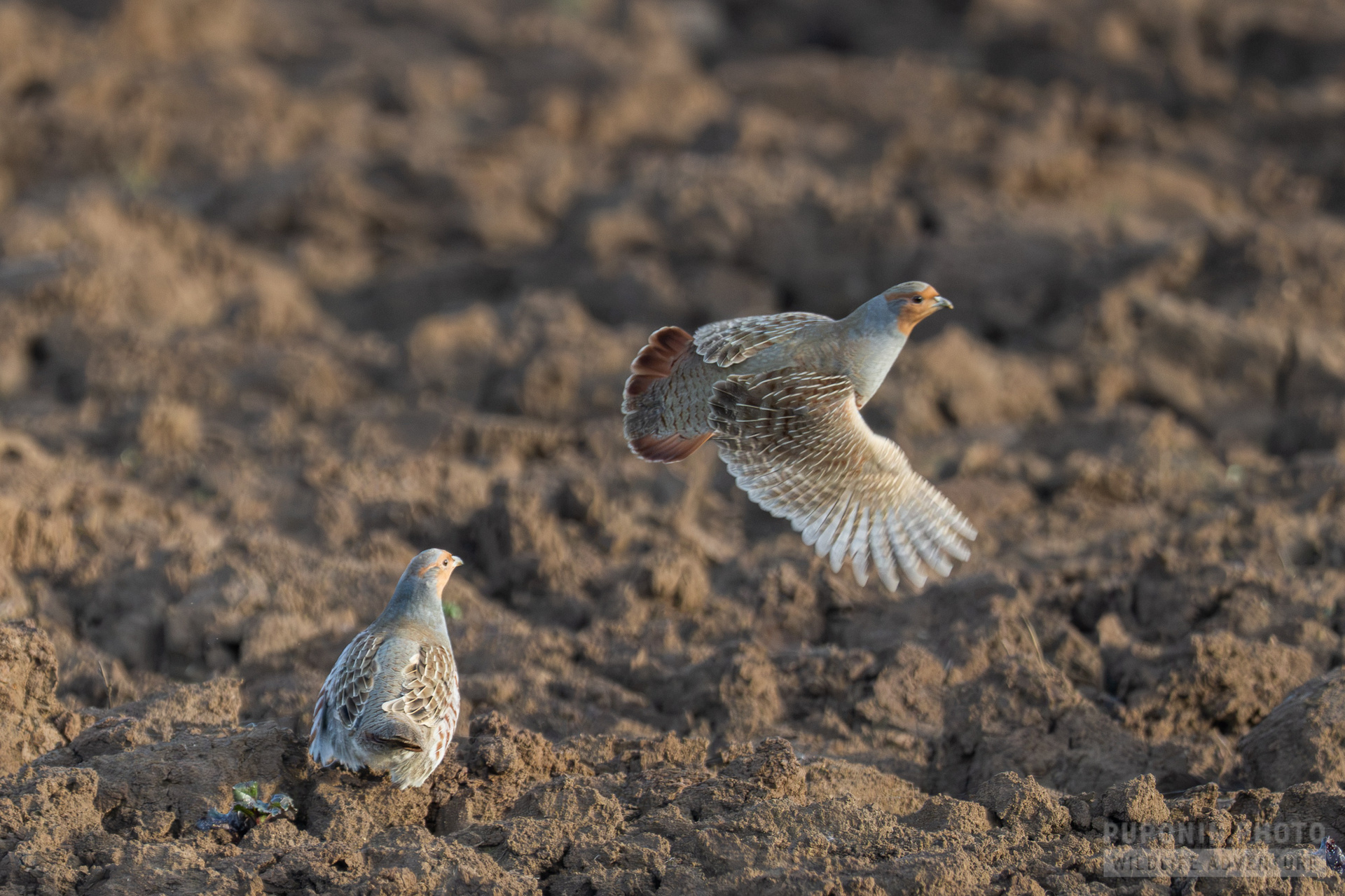
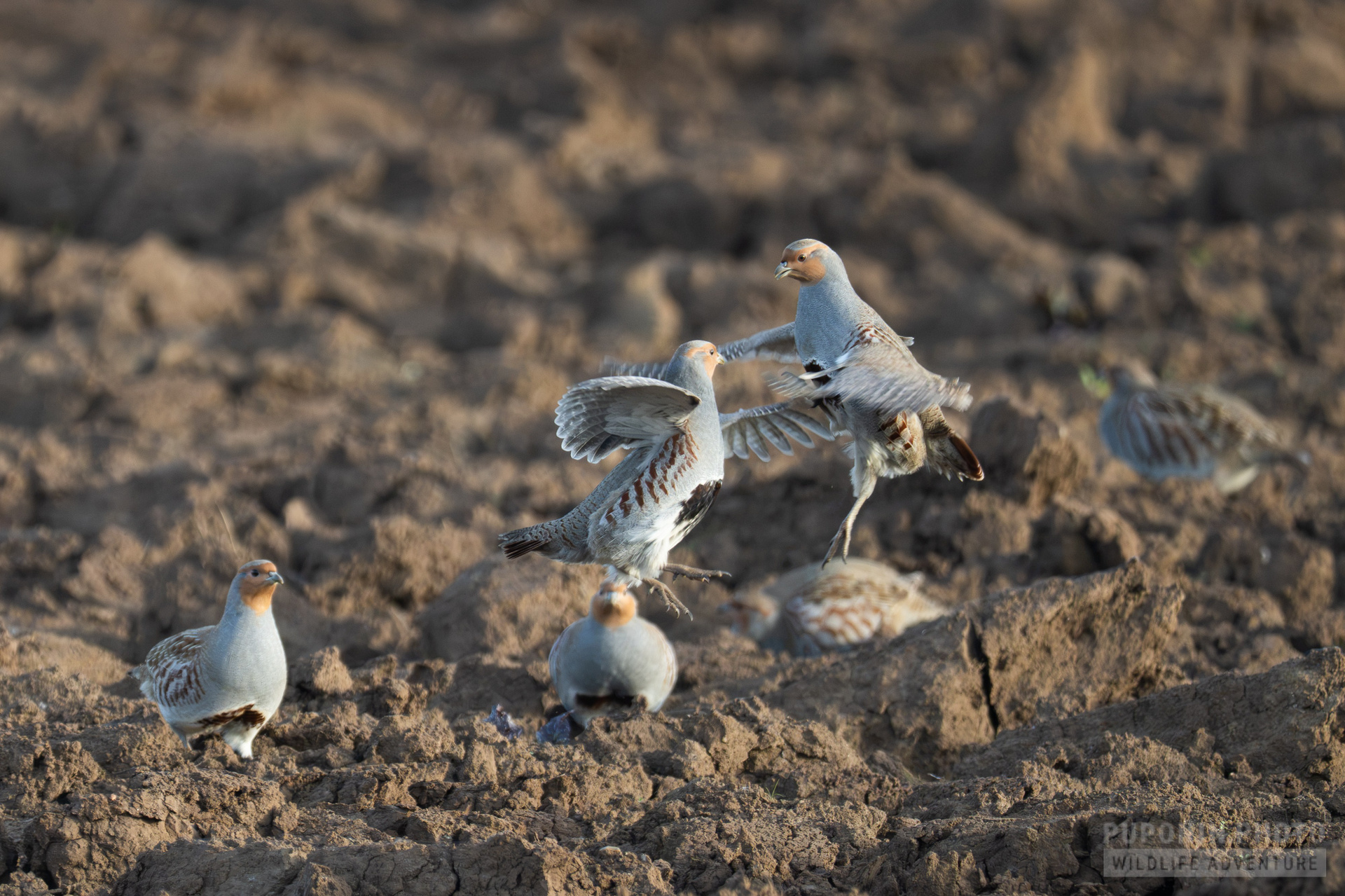
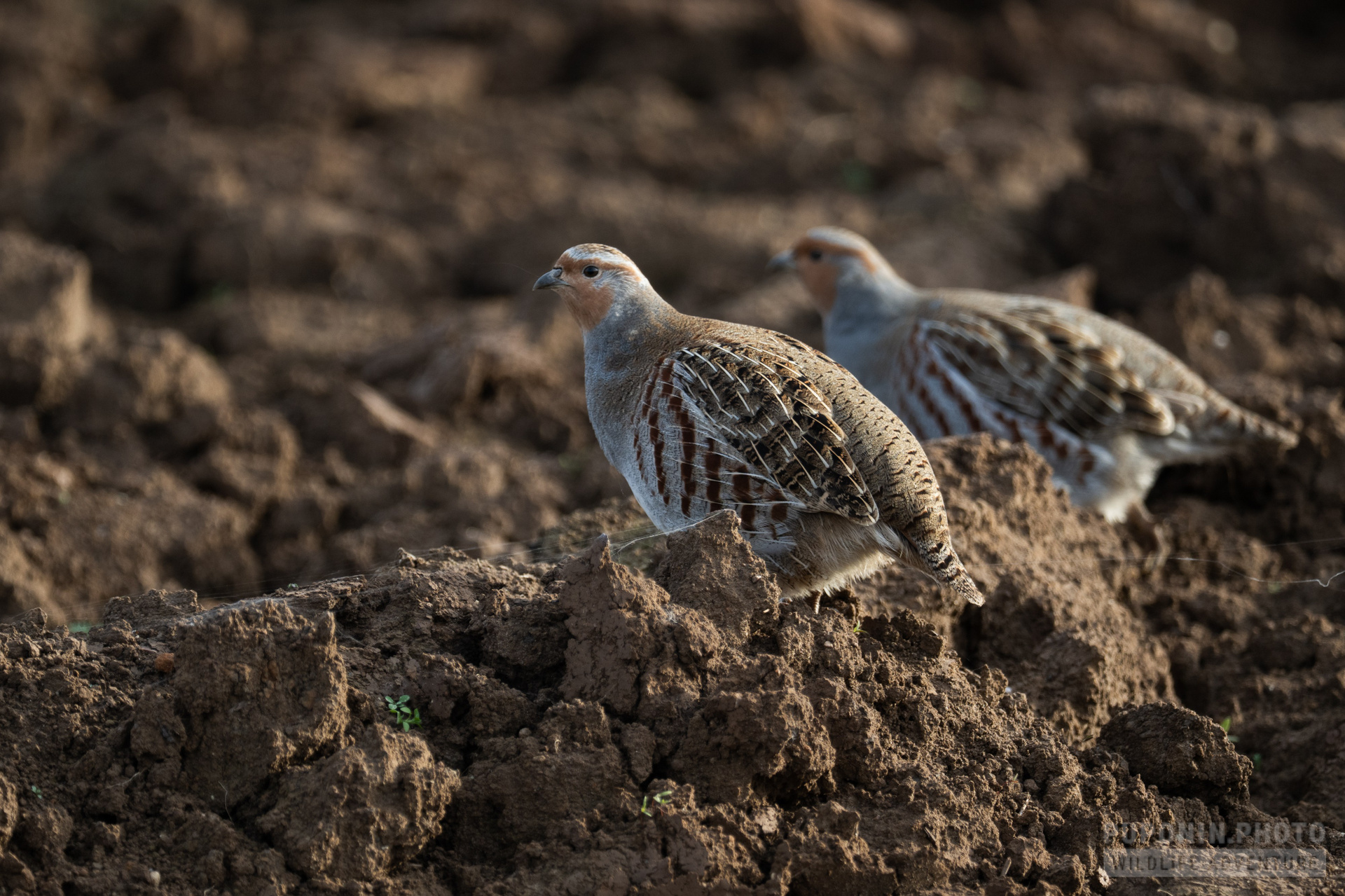
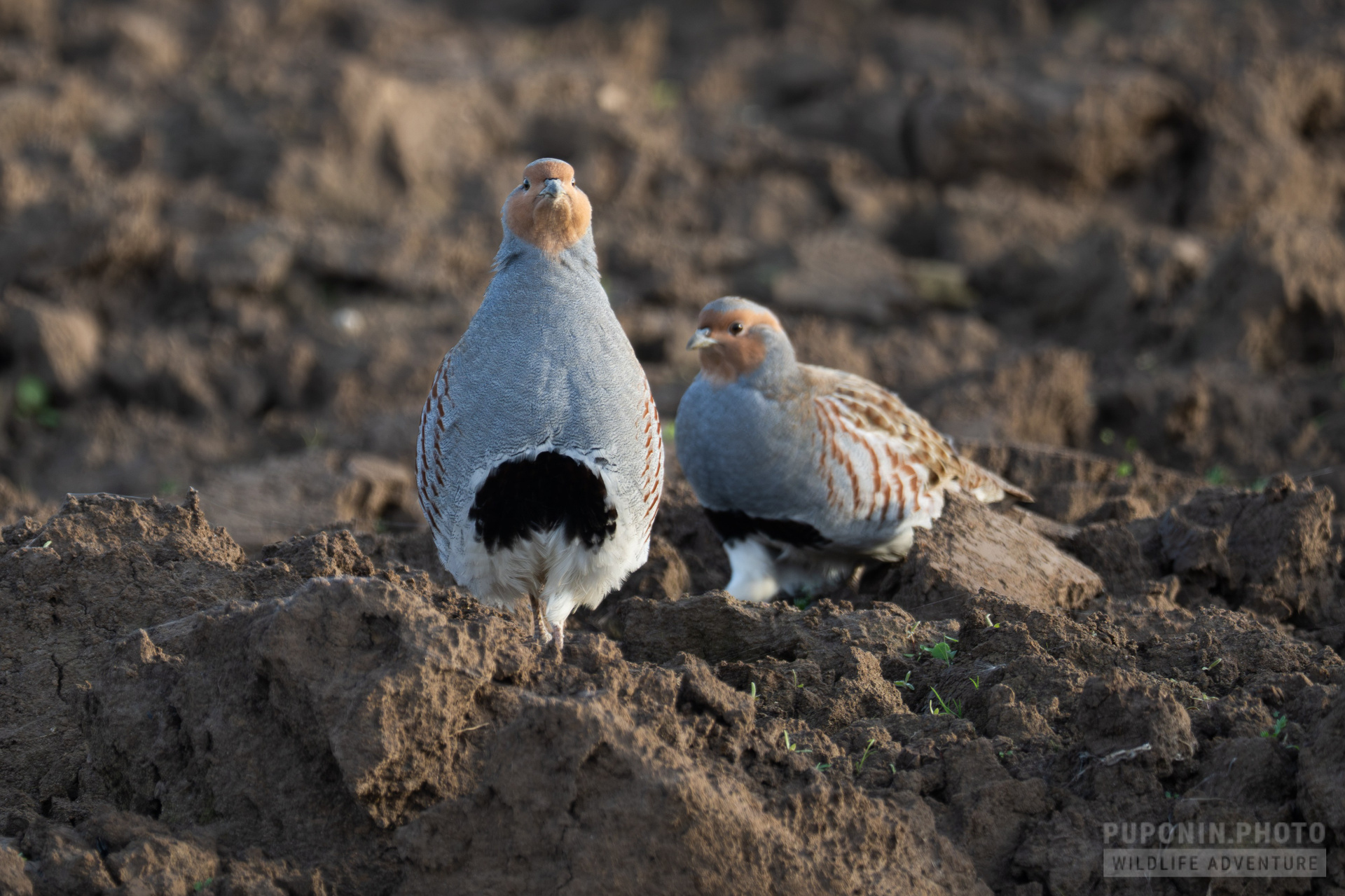
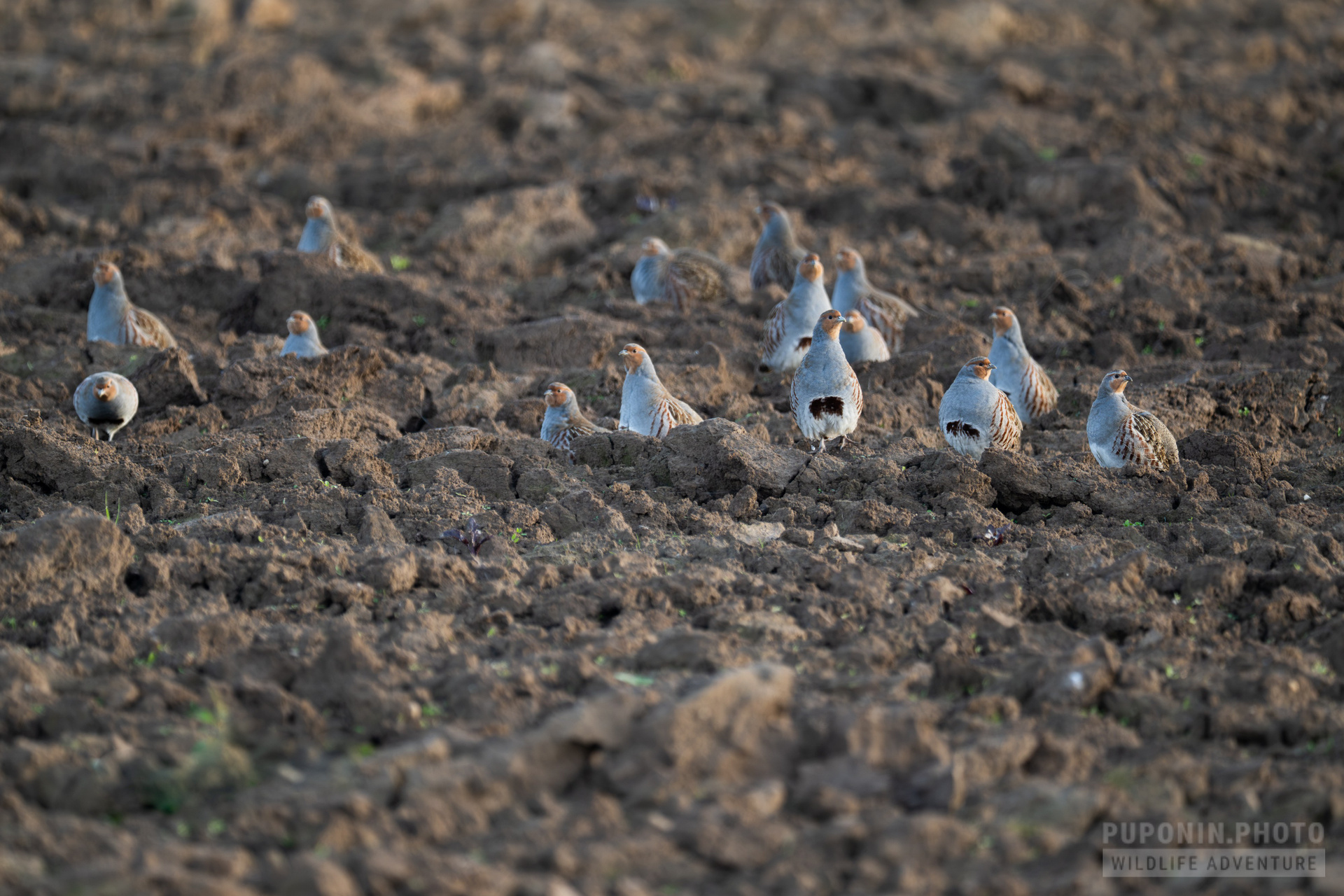
In a nearby field, I spotted two groups of Grey Partridges (Perdix perdix). They were keeping somewhat apart, although they remained fairly close to each other. The birds wandered through the grass, occasionally gathering together and constantly communicating with soft chirping calls.
What struck me was how quickly their behaviour changed depending on the situation.
Whenever a bird of prey flew overhead, the partridges immediately froze and pressed themselves flat against the ground, relying on their camouflage. But as soon as the danger had passed and the sun came out again, they became active, running around, chirping and occasionally chasing one another.
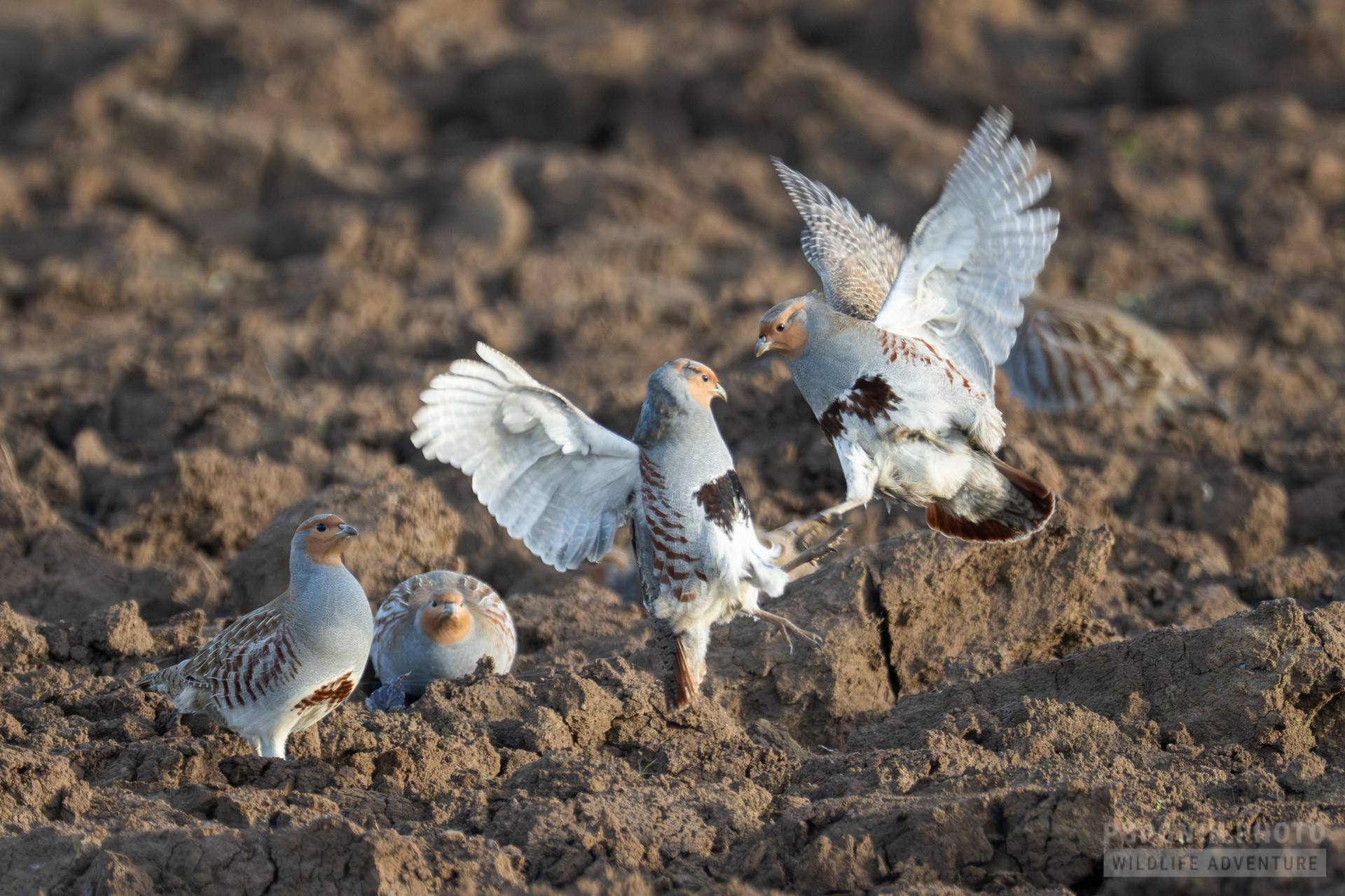
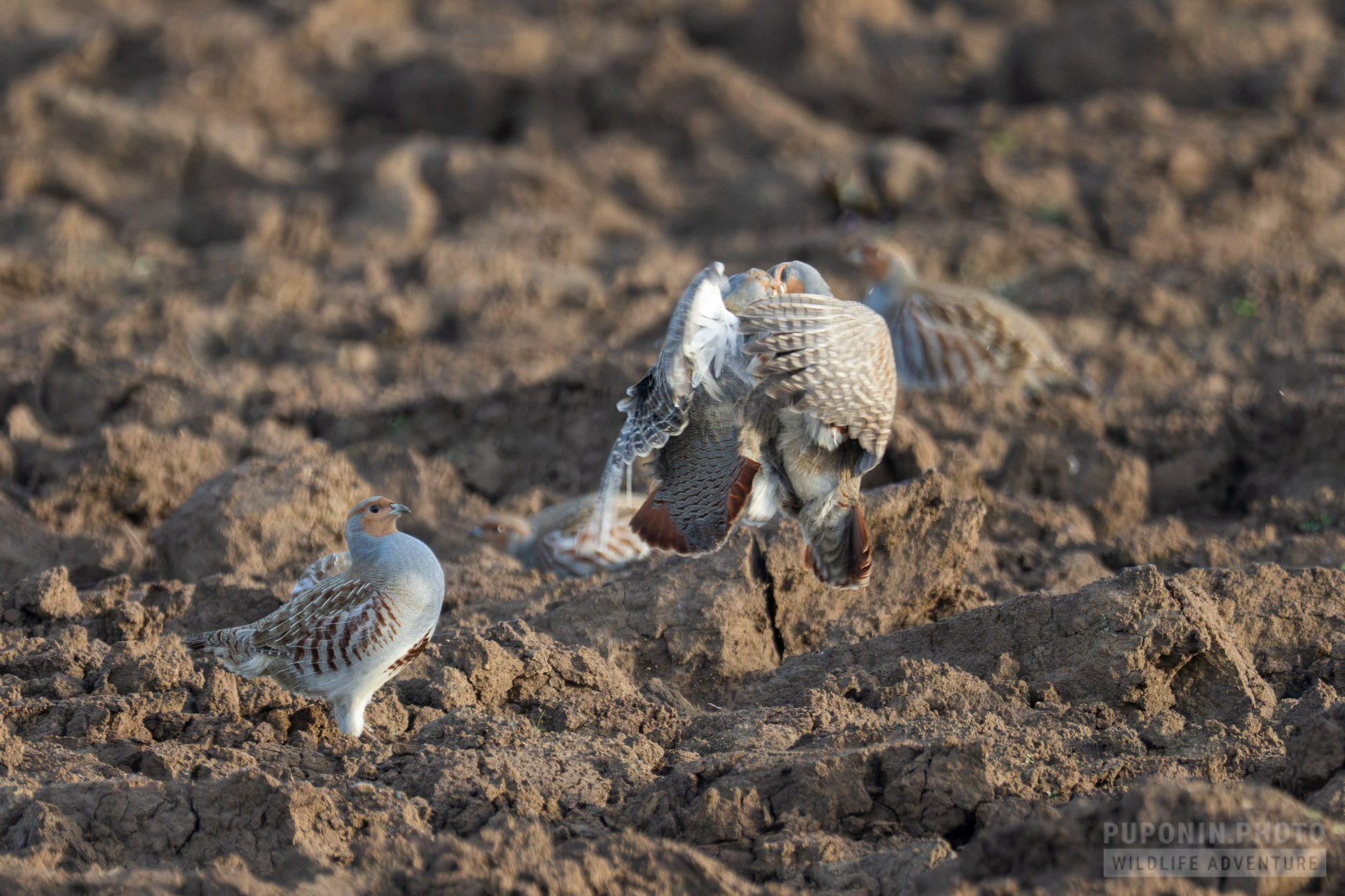
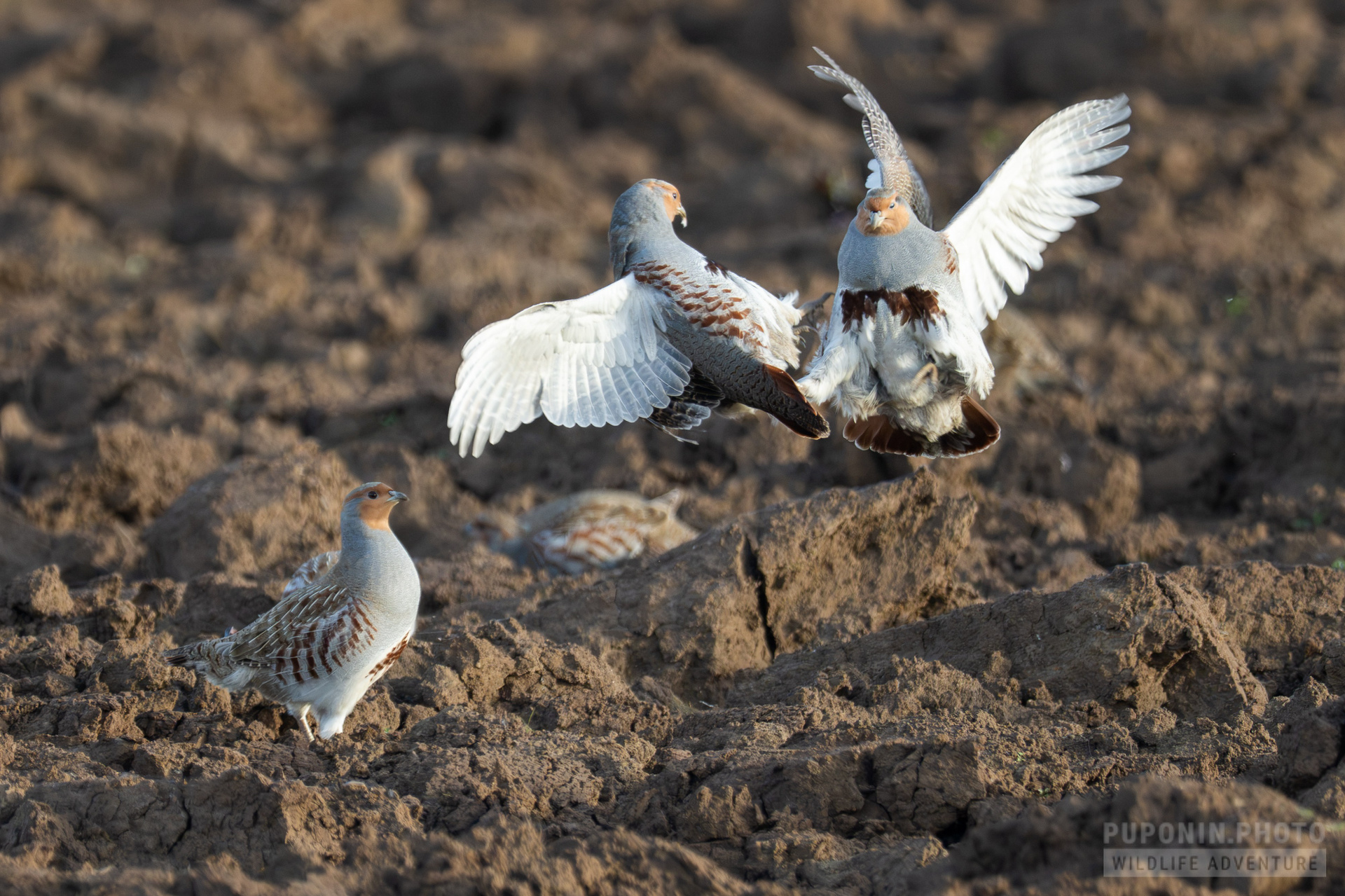
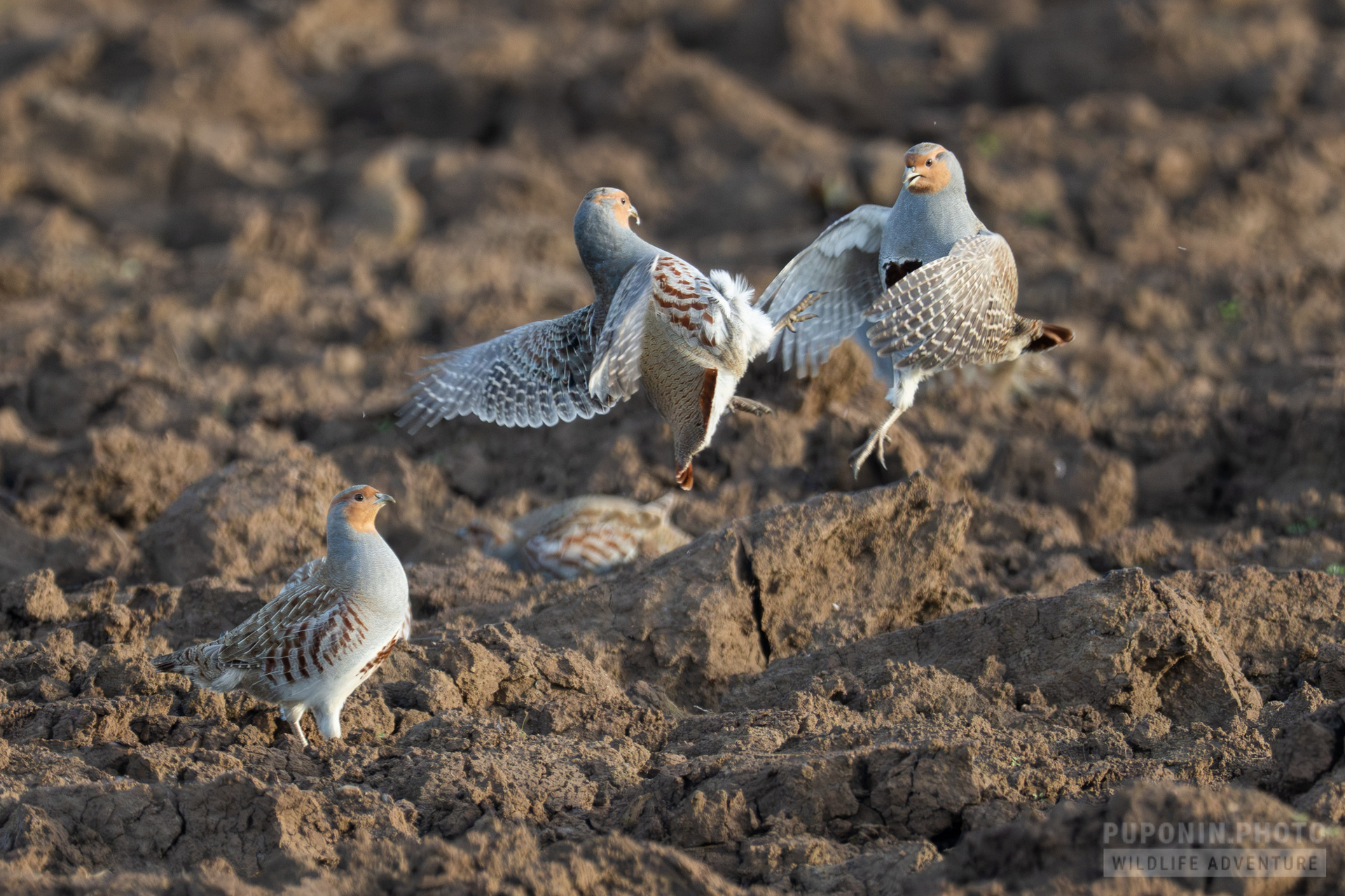
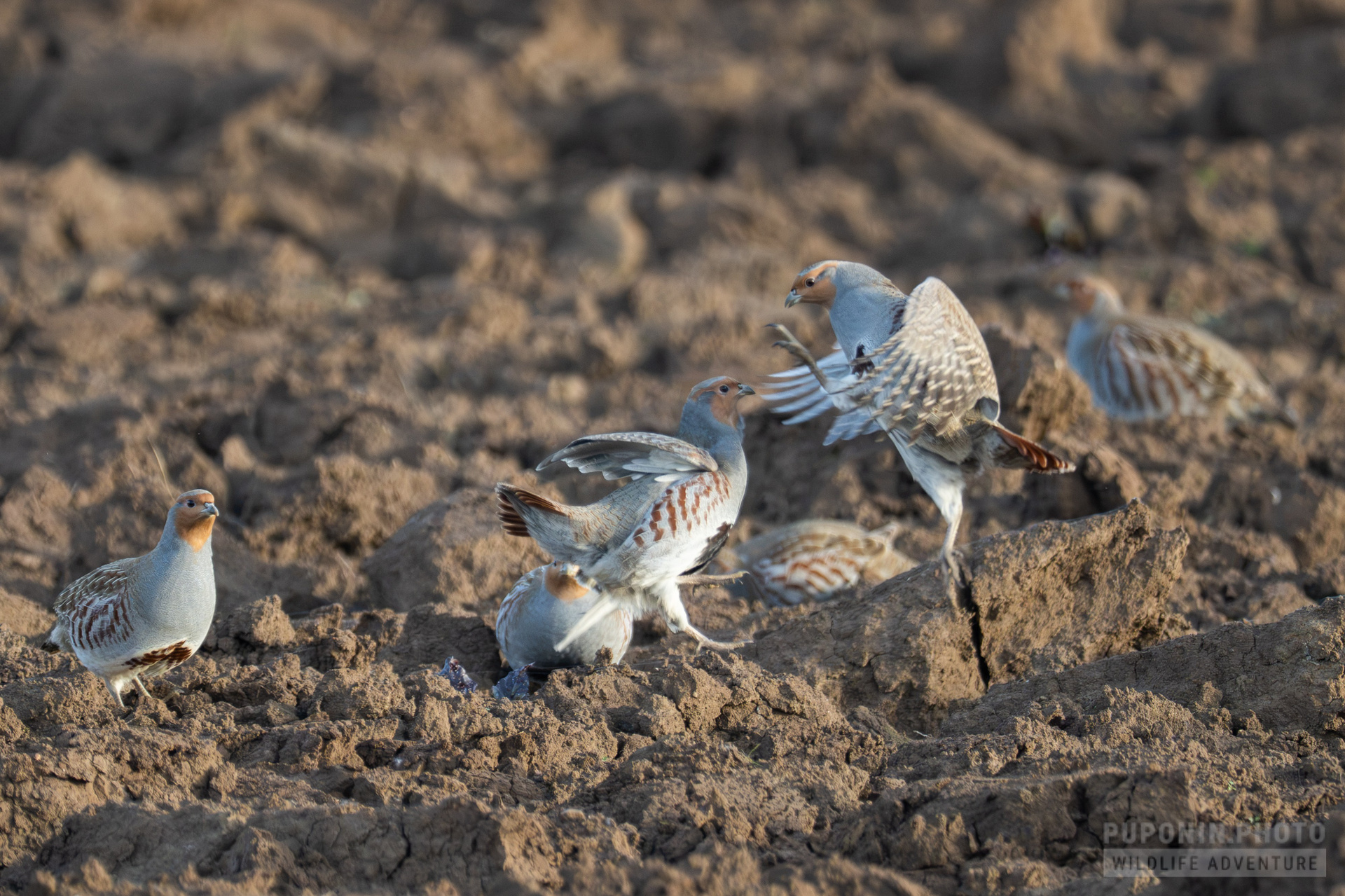
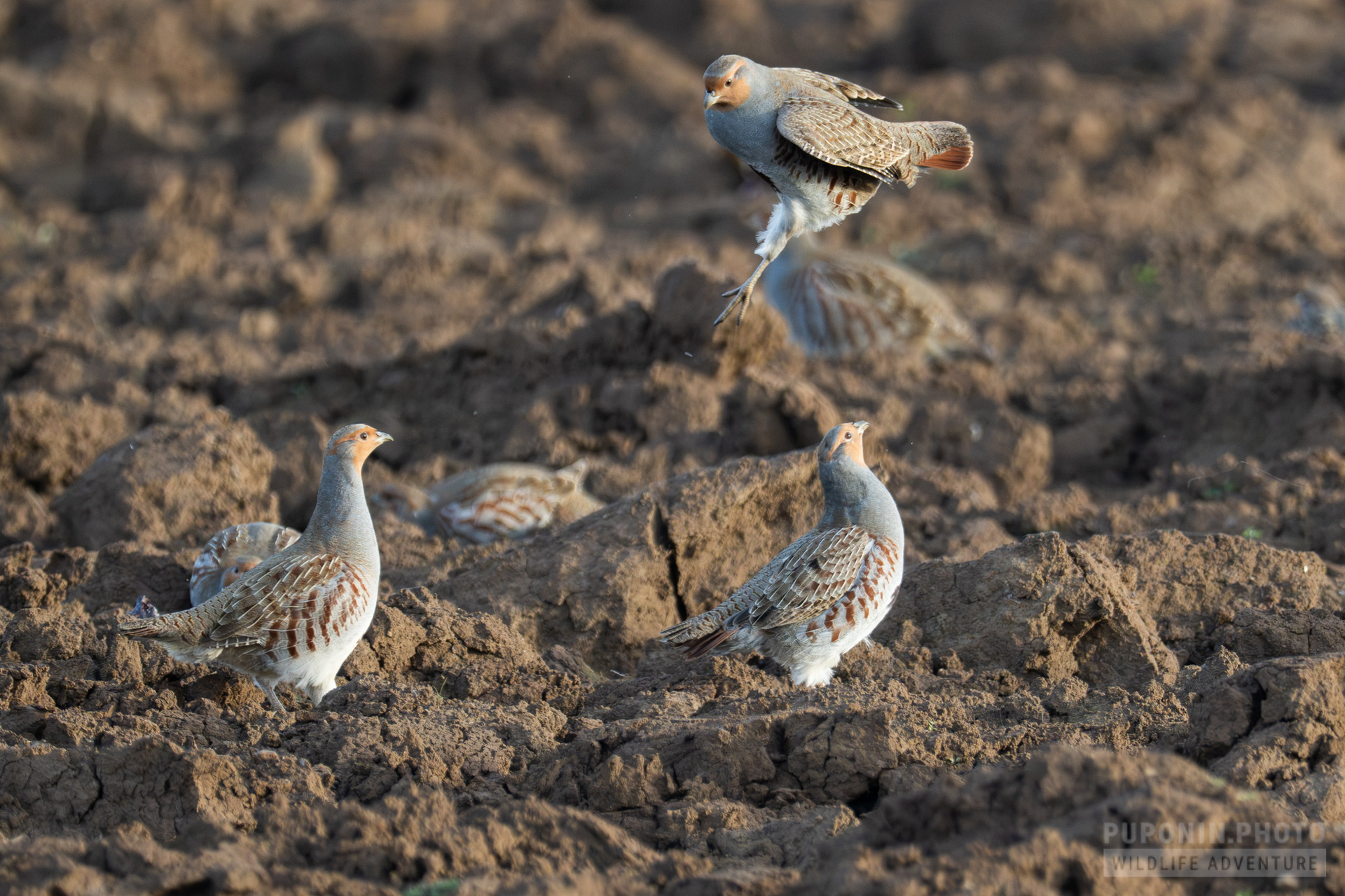
Three young partridges were particularly entertaining. They kept getting into little fights. I couldn’t tell whether they all belonged to the same family group or whether some rivalry had developed between birds from the two neighbouring groups.
Their fighting technique was extraordinary. They looked like tiny karate fighters!
The birds would leap high into the air and deliver rapid combinations of kicks: one foot, then the other, then the first again. Sometimes two birds jumped towards each other almost simultaneously, clashed in mid-air, landed and immediately started another round.
I spent quite a while watching their encounters. Gradually, the birds approached surprisingly close.
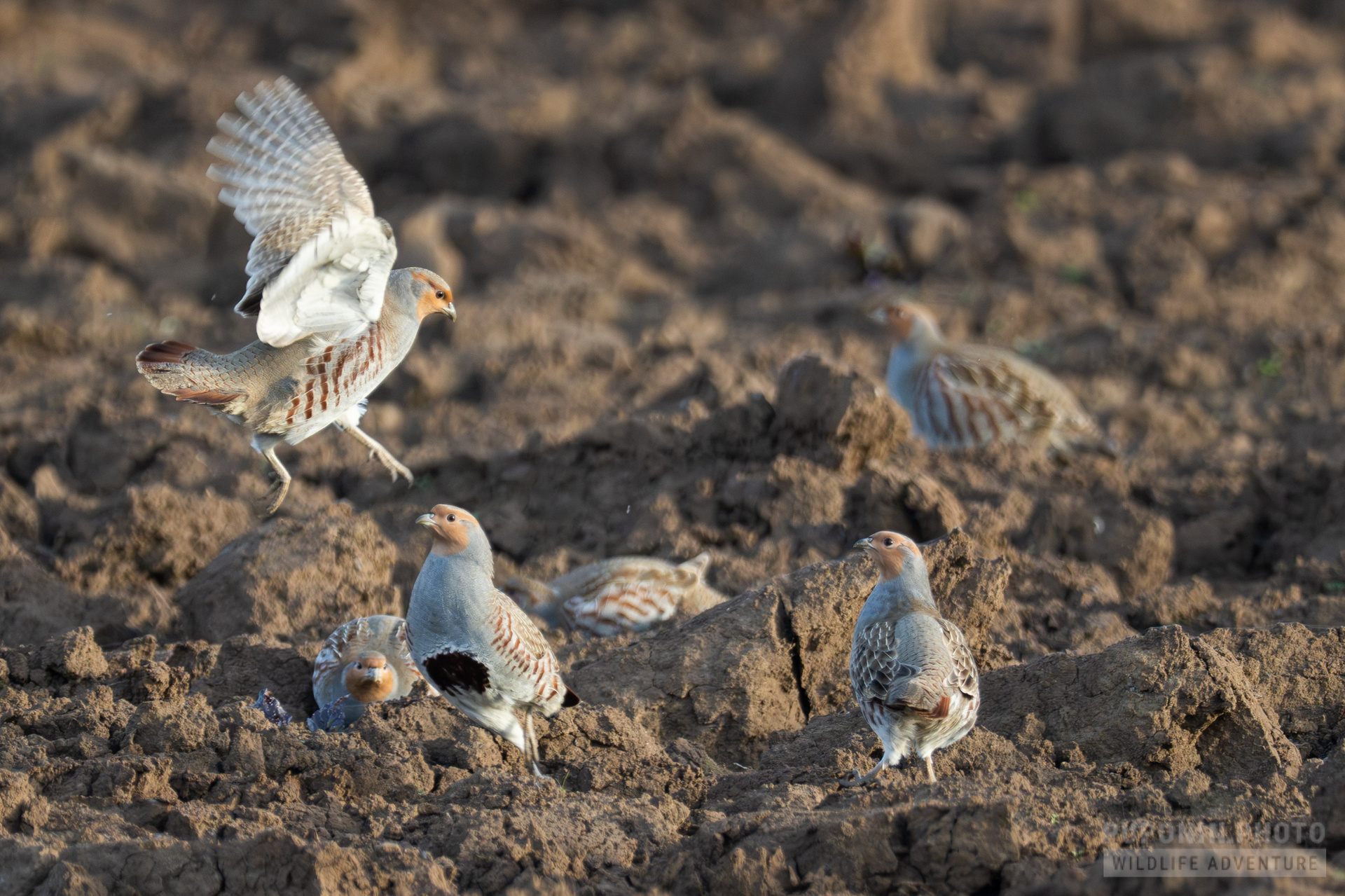
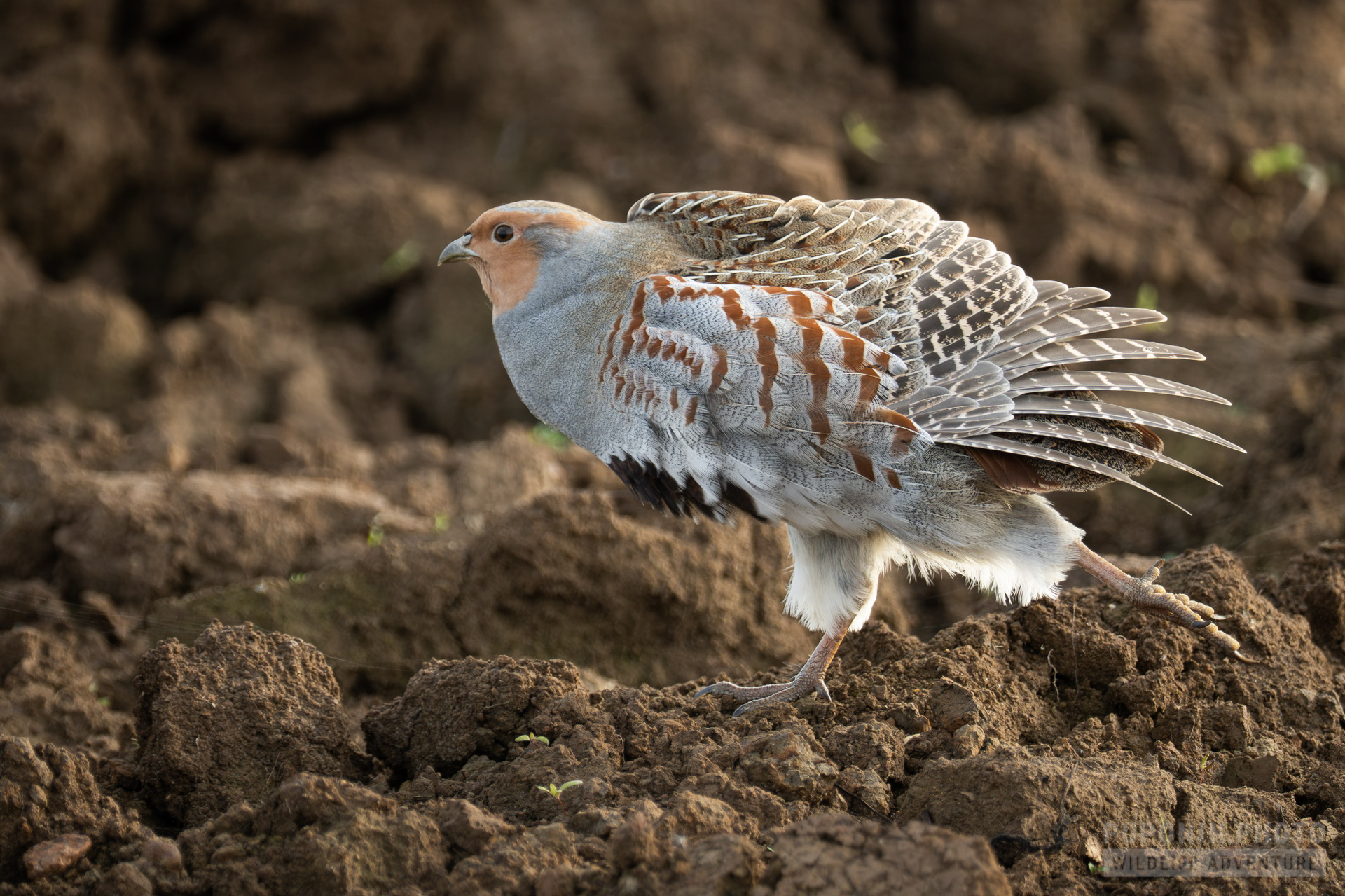
Then one of the partridges performed a completely different, rather elegant movement. It stretched one leg backwards, almost as if stretching after a nap, and spread its wing wide open. The flight feathers unfolded into a beautiful fan, creating a graceful pose that I managed to capture in a photograph.
But what happened next left an even deeper impression on me.
I had started recording the partridges on video when suddenly the bells of a nearby monastery began to ring. Their beautiful, overlapping tones drifted across the field.
And then I noticed something extraordinary.
The partridges seemed to be moving in time with the bells. They pecked at the ground, shifted about and continued their little activities, and somehow their movements appeared to coincide with the rhythm of the ringing.
I sat there watching and listening, and a remarkable feeling of warmth and happiness came over me. For a brief moment, everything around me seemed to belong to one great movement.
In Indian philosophy, there is a concept called Lila — divine play, the cosmic dance of existence. And for some reason, that was exactly the word that came to mind.
Of course, the partridges weren’t actually dancing to the monastery bells. Most likely, it was simply a coincidence of rhythms. But what an extraordinary coincidence it was!
For a few moments, it felt as though I had glimpsed some hidden harmony in the world, something we normally pass by without noticing.
There are things we can explain, and there are experiences that we don’t necessarily want to reduce to explanations. Sometimes it is enough simply to be present, to observe, and to be amazed.
I had set out that morning to photograph red deer, but never saw a single one. Instead, I listened to a Great Grey Shrike’s remarkable concert, watched the acrobatic duels of young partridges, and unexpectedly witnessed a little dance of the universe accompanied by monastery bells.
And somehow, that moment touched me deeply.
It’s for unexpected experiences like these that I keep heading out into the field before sunrise.

Double Portrait: Red Deer

Morning in the flood meadows. A vocal duel between red deer stags.

The First Frost. Red Deer Wildlife Photography on a Crystal-Covered Morning.

Полевое тестирование Sony 600 mm F/6.3 GM OSS. День первый.

Полевое тестирование Sony 600 mm F/6.3 GM OSS. День второй. 2TC = 1200 mm!


Турухтаны


